

What the 2026 Intelligence Report Reveals About the Dangers Facing the U.S.
Active conflicts are at their highest number since World War II, nuclear arsenals are growing, cyber attacks are escalating, and ideologies are spreading through phones in the hands of teenagers.
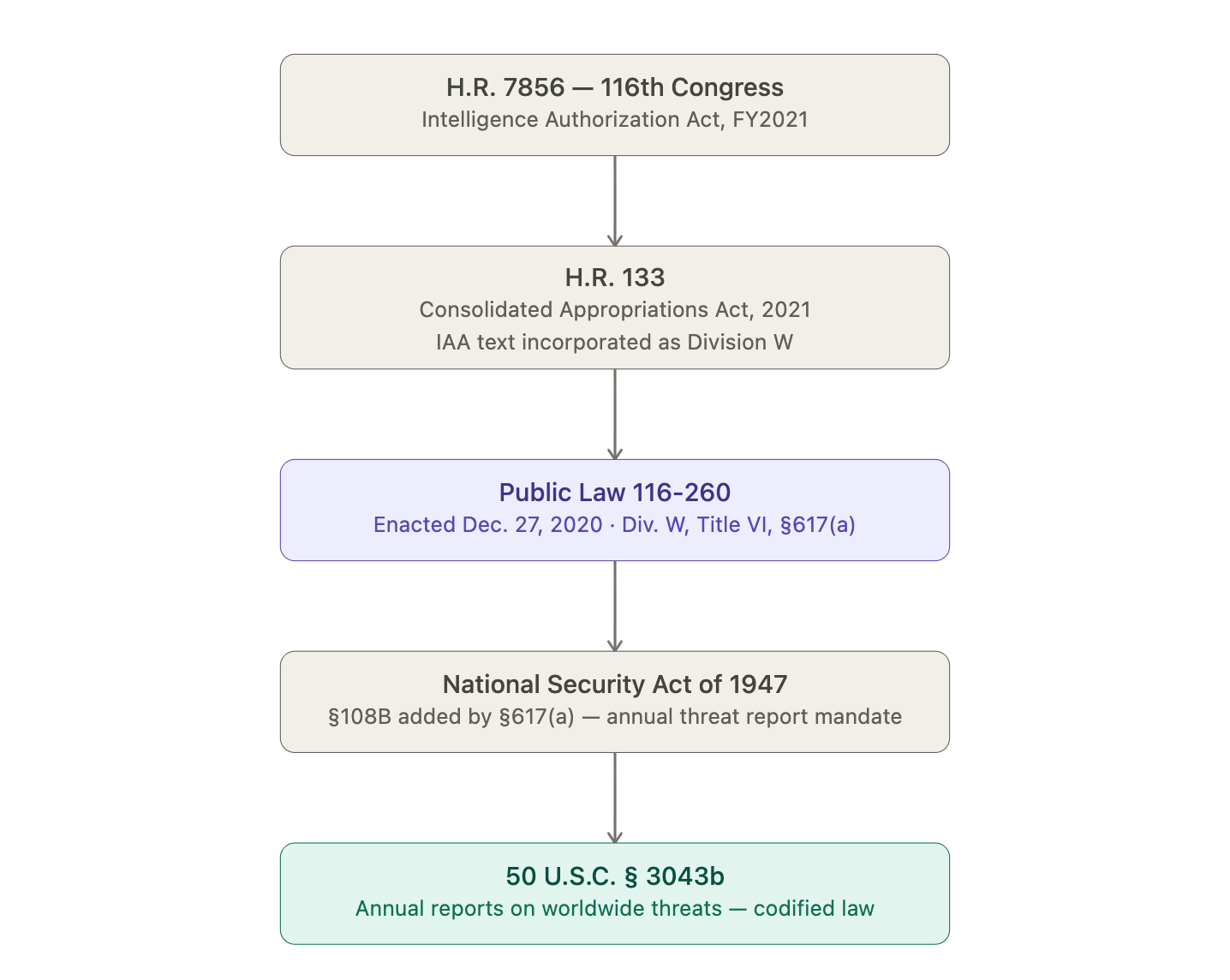
The annual threat assessment is a report that reflects the collective intelligence community’s insights on worldwide threats to U.S. national security and interests. The report signals to readers where credible threats exist, the actions by the U.S. in response to the threats, and residual risks to be considered by stakeholders such as lawmakers, the defense community, local governments, businesses, and the public. We thought it may be helpful to understand the law(s) these annual reports respond to and the origin. H.R. 7856, the standalone IAA FY2021 bill, was combined with H.R. 133 (the omnibus appropriations vehicle) and became Division W. When H.R. 133 was signed into law, it became P.L. 116-260. Division W, Title VI, §617(a) changed the National Security Act of 1947 by adding §108B. This new section was added to the permanent U.S. Code as 50 U.S.C. § 3043b.
Now that we exited that maze, let's look at the report. The 2026 assessment does not sugarcoat reality. The world is more complex and more volatile than it was just five years ago. Active conflicts are at their highest number since World War II, nuclear arsenals are growing, cyber attacks are escalating, and ideologies are spreading through phones in the hands of teenagers. The Intelligence Community (IC) did its job delivering the warning.
Institutions, authors, and leaders often highlight strategic defenses and geographical advantages, but while the U.S. retains military deterrents and geo advantages, does political will exist to match the scale of the threats?
Danger and Progress at the Borders
Increased Mexican and U.S. border security has created a substantial shift in migration and trafficking. Migrant encounters were down 83.8 percent year-over-year (YoY) in January 2026, confirming the policy shift has produced measurable results. However, instability and hardships for populations in countries such as Haiti and Cuba, and extreme weather conditions in Central America are likely to continue in 2026. These conditions could lead to migration surges from these countries and regions.
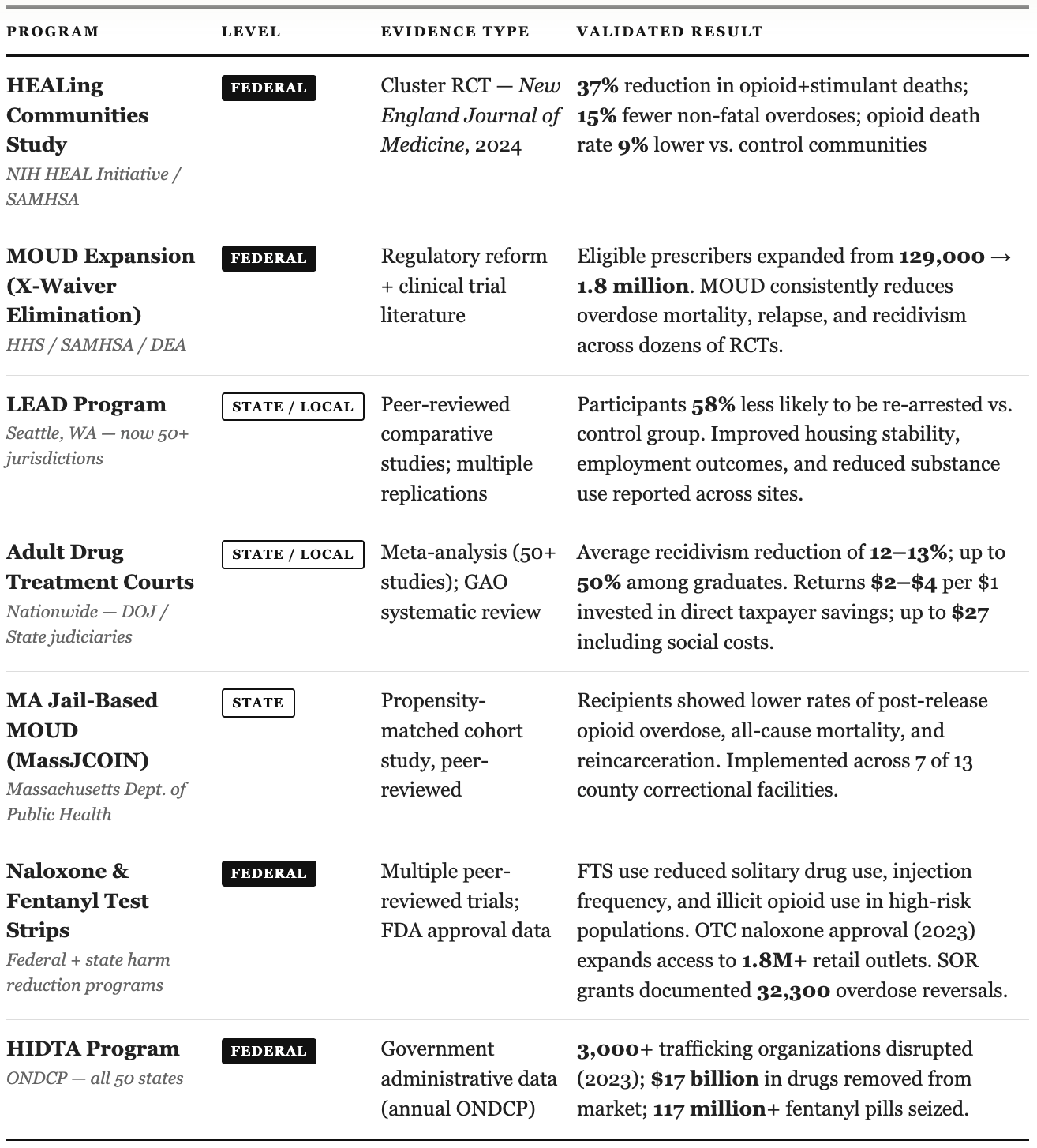
The report states that Ports of entry, like the US-Mexico border, "probably remain the main access point for illicit drugs," with seizure increases also observed at the U.S.-Canada border in the last three years. Fentanyl is blamed for more than 38,000 deaths in America for the 12-month period ending September 2025, which, according to the CDC, represents a 30% drop in opioid-related deaths. Efforts to affect the supply-chain of precursor chemicals used to make fentanyl are progressing, with signals indicating deepening partnerships between the U.S., China, and India to govern the flow of chemicals for fentanyl manufacturing. Bedrock principles would require serious attempts to combat this threat to address demand. We'll dive into details on another post, but there are notable efforts underway to address demand at state and federal levels:
The Changing Shape of the Terrorism Threat
The Intelligence community assesses that the most likely attack on U.S. soil will not come from a foreign operative but from a radicalized citizen or resident. Attacks in New Orleans, Boulder, Colorado, and an attack by a 16-year-old from Virginia that rammed a stolen vehicle into a police vehicle were highlighted as indicators of the evolving threat. Teenagers are now a significant portion of U.S.-based extremist plots. Social media is the recruitment ground, and short-form, emotionally charged content is the weapon.
It's highly likely that this threat will have an impact on Section 702 of the Foreign Intelligence Surveillance Act, set to sunset in April 2026. FISA has remained a highly debated initiative due to its authorization enabling the surveillance of non-U.S. persons abroad, warrant sidestepping features, and its impact on the privacy of U.S. citizens and residents.
Growing Missile and WMD Threats
The Intelligence report projects that threats to the U.S. from enemy missiles will grow from more than 3,000 today to more than 16,000 by 2035. China, Russia, North Korea, Iran, and Pakistan are all developing advanced, novel, or traditional missile delivery systems capable of reaching the continental United States. Russia's nuclear arsenal remains the largest and most diverse in the world. There are concerns by the IC that a miscalculation, accident, or provocation could lead to escalations that draw U.S. and NATO forces into direct conflict with Russia.
With such a critical threat situated on the probability scale, we find it concerning that the U.S. leadership would allow the New START Treaty to expire without a clear path forward. Challenges with the treaty were addressed by the Undersecretary for Arms Control and International Security; however, the Trump Administration's National Security Strategy (NSS) seems to plot a change in course to address the growing threat.
Technological Arms Race
The next great power competition is not being fought with missiles alone. It is being fought in server farms and quantum computing labs. AI is already reshaping warfare. It is influencing targeting decisions, accelerating weapons design, enabling autonomous systems, and powering cyber operations on both offense and defense. The IC posits that the nation that leads in AI holds a decisive strategic advantage.
Advanced semiconductors are the foundation of this race. Whoever controls chip design and manufacturing controls the future of military AI. The U.S. currently leads, but that lead is narrowing, and China aims to seize that lead from the U.S. by 2030.
Quantum computing represents an even more disruptive long-term threat. A cryptographically relevant quantum computer, which no country has built yet, could break every encryption method protecting financial systems, healthcare records, and government secrets. The race to build it and to develop quantum-resistant encryption before an adversary does is already underway. The U.S., China, the EU, Japan, and the UK are all pouring billions into the competition.
The 2026 Annual Threat Assessment (ATA), released by the Office of the Director of National Intelligence, paints a stark picture of a world growing more dangerous by the day. The topics and points highlighted in this article do not provide the breadth and depth of the full unclassified text. At Bedrock Intelligence, we help our community members navigate what’s within their control. We recommend that our community members explore the content and contact their congress person or senator to voice their opinion.
As we explore the global threat landscape, we'll share insights and tips to help you navigate and focus. Consider becoming a member to take advantage, stay informed, and grounded in reality.